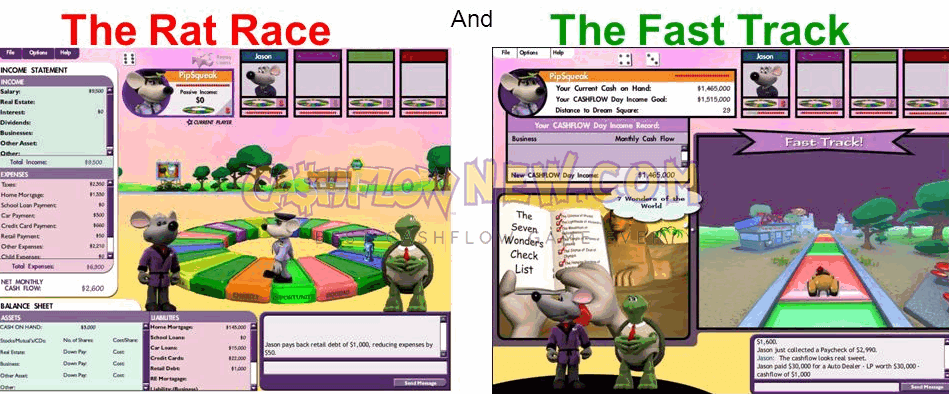
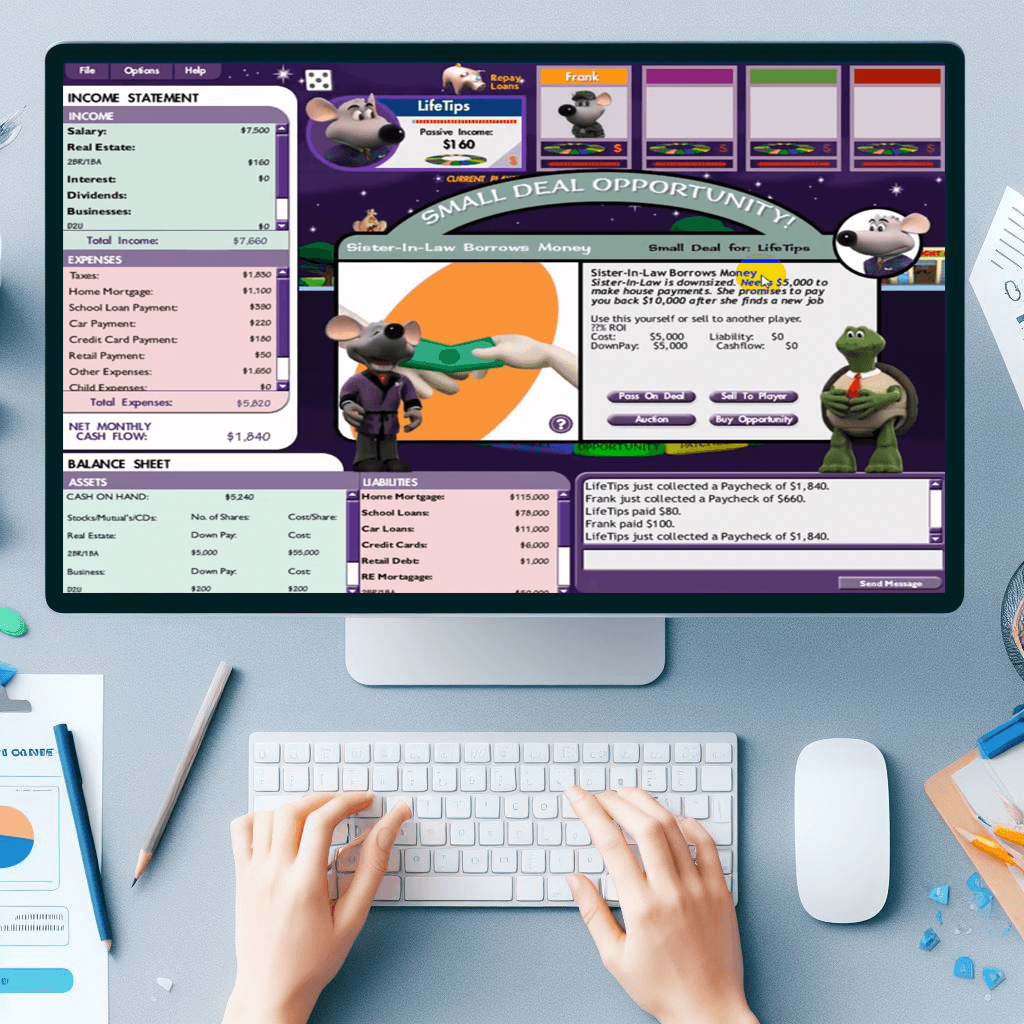
CASHFLOW, the financial education game created by Robert Kiyosaki, works well solo on PC, but it really shines around a table. Here are ten reasons to make it a group activity, followed by a quick guide to hosting your first game night.
1. You see many strategies at once
One player flips houses, another hunts cheap stocks, another saves for Big Deals. Watching all of them in a single game teaches you more than any book chapter.
2. The auditor keeps everyone honest
In the board game, the player on your right checks your financial statement. Explaining your numbers out loud is one of the fastest ways to really understand an income statement and balance sheet.
3. Money talk becomes normal
Many people never discuss money with friends. A game creates a safe reason to talk about debt, expenses and investing without anyone sharing their real bank balance.
4. You can make deals with other players
Some Opportunity cards can be sold to another player at a negotiated price. Negotiating with real people teaches you to judge value quickly.
5. Mistakes cost play money, not real money
Taking too much debt or selling too early hurts only your game card. Friends will point out what went wrong, and you will remember it.
6. Market cards affect everyone
When a Market card offers a high price for an asset, every player who owns it can sell. You learn to watch the whole market, not just your own turn.
7. It builds critical thinking
Every turn asks a question: is this deal worth the cash and the debt? Hearing others explain their choices sharpens your own reasoning.
8. It is genuinely fun
Escaping the Rat Race while your friends cheer, or groan, is a great moment. Fun is what makes the lessons stick.
9. It can grow into a CASHFLOW club
Many groups meet monthly to play. Over time the group becomes a network of people who share books, ideas and real investing experiences.
10. It is a great family activity
Teens can play CASHFLOW 101 with adults, and younger children can start with CASHFLOW for Kids. Families who play together build a shared language about money.
How to host a CASHFLOW game night
- Invite 3 to 6 players. Four is a good number for a first game.
- Plan 2 to 3 hours. First games run longer while everyone learns the financial statement.
- Choose one experienced player as banker. A confident banker keeps the game moving.
- Do a 10-minute rules briefing. Explain the goal: passive income greater than expenses.
- Debrief at the end. Ask each player which decision helped most and which they regret.
FAQ
How many people can play CASHFLOW?
The board game is designed for 2 to 6 players. The PC e-game also supports single-player games against computer opponents.
How long does a CASHFLOW game take?
Most CASHFLOW 101 games take 1 to 3 hours depending on the number of players and their experience. CASHFLOW 202 usually takes longer.
Is CASHFLOW good for teenagers?
Yes. Teens can play CASHFLOW 101 with some adult help on the financial statement. Younger children can start with CASHFLOW for Kids.
Play CASHFLOW 101 & 202 on your PC
Get the Windows e-game edition with a step-by-step installation tutorial and video lessons, so you can practice these strategies tonight.